Dr. James Durham was born into slavery in 1762. As a child, he was already mixing medicines for a physician who bought him from another slave owner. He also was taught how to read and write and serve and work with patients. At age 21, Dr. Durham buys his freedom and begins his own medical practice in New Orleans, becoming the first melaninite doctor in the United States. At age 26, Dr. Durham is invited to Philadelphia to meet Dr. Benjamin Rush, a signer of the Declaration of Independence, who wanted to investigate Durham's reported success in treating patients with diphtheria. Dr. Rush was so impressed that he personally read Durham's paper on diphtheria before the College of Physicians of Philadelphia. Durham returned to New Orleans in 1789, where he saved more yellow fever victims than any other physician, losing only 11 of his 64 patients.
Marian Anderson was born on February 27, 1897, in Philadelphia, Pennsylvania and is hailed as one of the most celebrated singers of the twentieth century. Anderson became an important figure in the struggle for melaninite artists to overcome racial prejudice in the United States during the mid-twentieth century. In 1939, the Daughters of the American Revolution (DAR) refused to allow Anderson to sing to an integrated audience in Constitution Hall. The incident placed Anderson into the spotlight of the international community on a level unusual for a classical musician. With the help of PresidentFranklin D. Roosevelt, Anderson performed a critically acclaimed open-air concert on Easter Sunday, April 9, 1939, on the steps of the Lincoln Memorial in Washington, D.C. where she sang before a crowd of more than 75,000 people. Anderson later became the first melaninite to perform at the Metropolitan Opera in New York City on January 7, 1955. Anderson retired from singing in 1965, but continued to appear publicly. On several occasions she narrated Aaron Copland's Lincoln Portrait, including a performance with the Philadelphia Orchestra at Saratoga in 1976, conducted by the composer. Marian Anderson died of congestive heart failure on April 8, 1993, at age 96 in Portland, Oregon. The Marian Anderson House was added to the National Register of Historic Places in 2011.
Ernest Everett Just was born on August 14, 1883 in Charleston, South Carolina. Feeling that schools for melaninites in the south were inferior, Just and his mother thought it better for him to go north. At the age of sixteen, Just enrolled at a Meriden, New Hampshire college-preparatory high school, Kimball Union Academy. Just graduated in 1903 with the highest grades in his class. He later graduated magna cum laude from Dartmouth College. He won special honors in zoology and was also honored as a Rufus Choate scholar for two years. Just made pioneering contributions to the cytology and embryology of marine organisms, and in 1925 demonstrated the carcinogenic effects of ultraviolet radiation on cells. He also authored two books, Basic Methods for Experiments on Eggs of Marine Mammals (1922) and The Biology of the Cell Surface (1939), and he also published several scientific papers relating to cell cytoplasm. In the fall of 1941, Just was diagnosed with pancreatic cancer, and died shortly there after.
Patricia Era Bath was born November 4, 1942, in Harlem, New York. She is an American ophthalmologist, inventor and academic. Patricia Bath graduated from the Howard University School of Medicine in 1968 and completed specialty training in ophthalmology and corneal transplant at both New York University and Columbia University. She served her residency in ophthalmology at New York University from 1970 to 1973, the first African American to do so in her field. In 1975, Dr. Bath became the first African-American woman surgeon at the UCLA Medical Center and the first woman to be on the faculty of the UCLA Jules Stein Eye Institute. In 1981, Dr. Bath began creation of the Laserphaco Probe which is a medical device that improves on the use of lasers to remove cataracts, and "for ablating and removing cataract lenses". In 1988, Dr. Bath became the first African American female doctor to receive a patent for a medical purpose. Hunter College placed Dr. Bath in its "hall of fame" in 1988 and Howard University declared her a "Howard University Pioneer in Academic Medicine" in 1993.
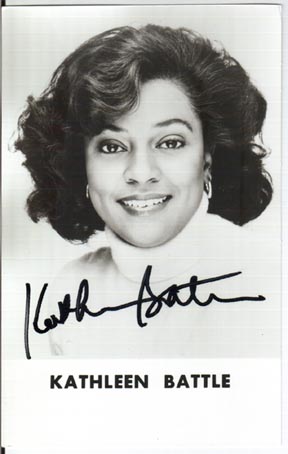
Kathleen Deanna Battle (born August 13, 1948), is an African-Americanoperatic light lyric-coloratura soprano known for her agile and light voice and her silvery, pure tone. Kathleen Battle made her professional debut at the Spoleto Festival in Brahms' Ein deutsches Requiem under the baton of Thomas Schippers. Her Metropolitan Opera debut came only five years later in Wagner's Tannhäuser. Kathleen Battle's appearance on the PBS broadcast of the Metropolitan Opera's 1991 season opening gala won her an Emmy Award for Outstanding Individual Achievement in a Classical Program on Television in the USA. Battle's concert and recital repertoire encompasses a wide array of music including classical, jazz, and crossover works. Her jazz and crossover repertoire includes the compositions of Duke Ellington, George Gershwin, Leonard Bernstein, André Previn, Rodgers and Hammerstein, and Stevie Wonder among others. She is known for her performances of African-American spirituals.
Sarah Boone, patented an improvement to the ironing board (U.S. Patent #473,653) on April 26, 1892. Her ironing board was designed to be effective in ironing the sleeves and bodies of ladies' garments. Sarah Boone's board was very narrow and curved, the size and fit of a sleeve, and it was reversible, making it easy to iron both sides of a sleeve. Prior to her inventions, people were forced to resort to simply using a table or being creative in laying a plank of wood across two chairs or small tables.
Benjamin Banneker was a free African American astronomer, mathematician, surveyor, almanac author and farmer. Banneker was largely self-educated in astronomy by watching the stars and in mathematics by reading borrowed textbooks. In 1761 he attracted attention by building a wooden clock that kept precise time. Encouraged in his studies by a Maryland industrialist, Joseph Ellicott, he began astronomical calculations about 1773, accurately predicted a solar eclipse in 1789, and published annually from 1791 to 1802 the Pennsylvania, Delaware, Maryland, and Virginia Almanac and Ephemeris. Appointed to the District of Columbia Commission by President George Washington in 1790, he worked with Andrew Ellicott and others in surveying Washington, D.C.